A floor has a quiet influence on the way a room feels. It anchors the colour palette, carries light through the space and forms the backdrop to everyday life. In a kitchen, entrance hall or boot room, it must also meet the practical demands of a busy home. Natural stone does both with ease, bringing depth, texture and a sense of permanence to the interior.
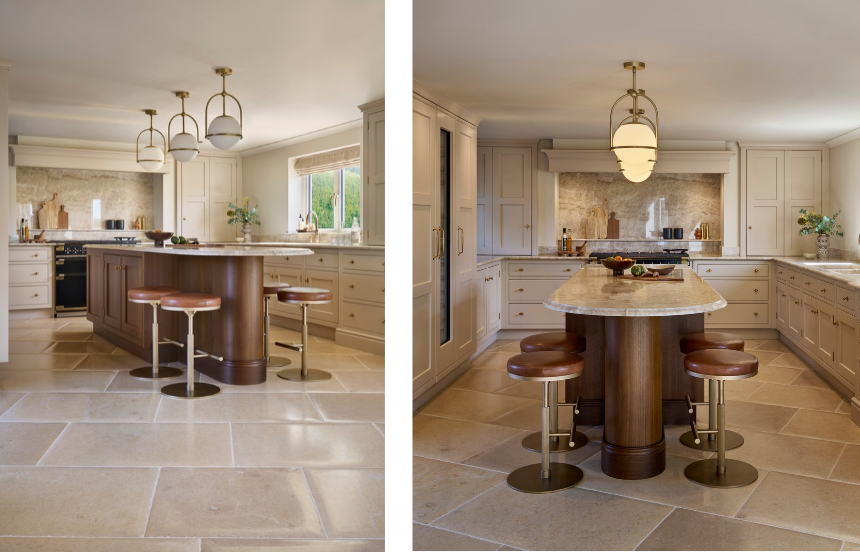
No two tiles are identical. Subtle shifts in tone, veining, shells and fossil markings give the stone its character and that character becomes richer as the floor settles into the rhythms of the house. Chosen well and cared for properly, stone does not simply endure. It develops a patina that feels entirely at home.
Natural stone flooring is made from stone quarried from the earth, then cut into tiles or larger slabs and finished for use underfoot. Unlike porcelain, which is manufactured, each piece retains the variations created by its geological formation. The finish can soften or emphasise those markings: honed stone has a smooth, matt appearance, while tumbled edges create a more timeworn quality.
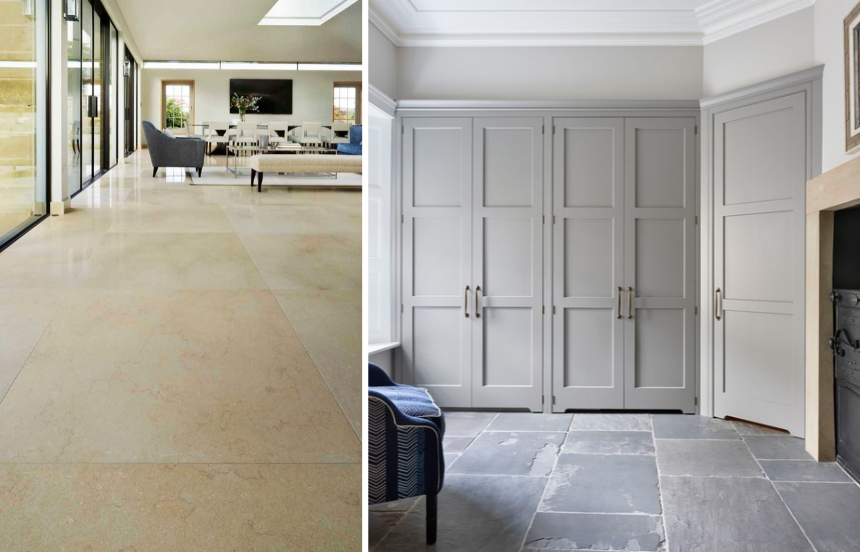
The right choice depends on the architecture of the house, the atmosphere you wish to create and how the room will be used. Limestone is particularly versatile, with gentle tonal movement and a relaxed elegance that suits both traditional and contemporary interiors. Our Aged stone collection includes shades ranging from pale cream and warm beige to cooler blue-grey, each with its own natural variations, textured surface and softly aged character.
Stone can feel equally at home in a country property or a contemporary townhouse. Scale and layout make a marked difference. Generous flagstones lend calm and continuity to an open-plan kitchen while a more regular tile format can bring rhythm to a smaller room. For spaces that flow into a terrace or garden, related tones inside and out can create an easy visual connection, subject to choosing the correct stone and finish for each setting.
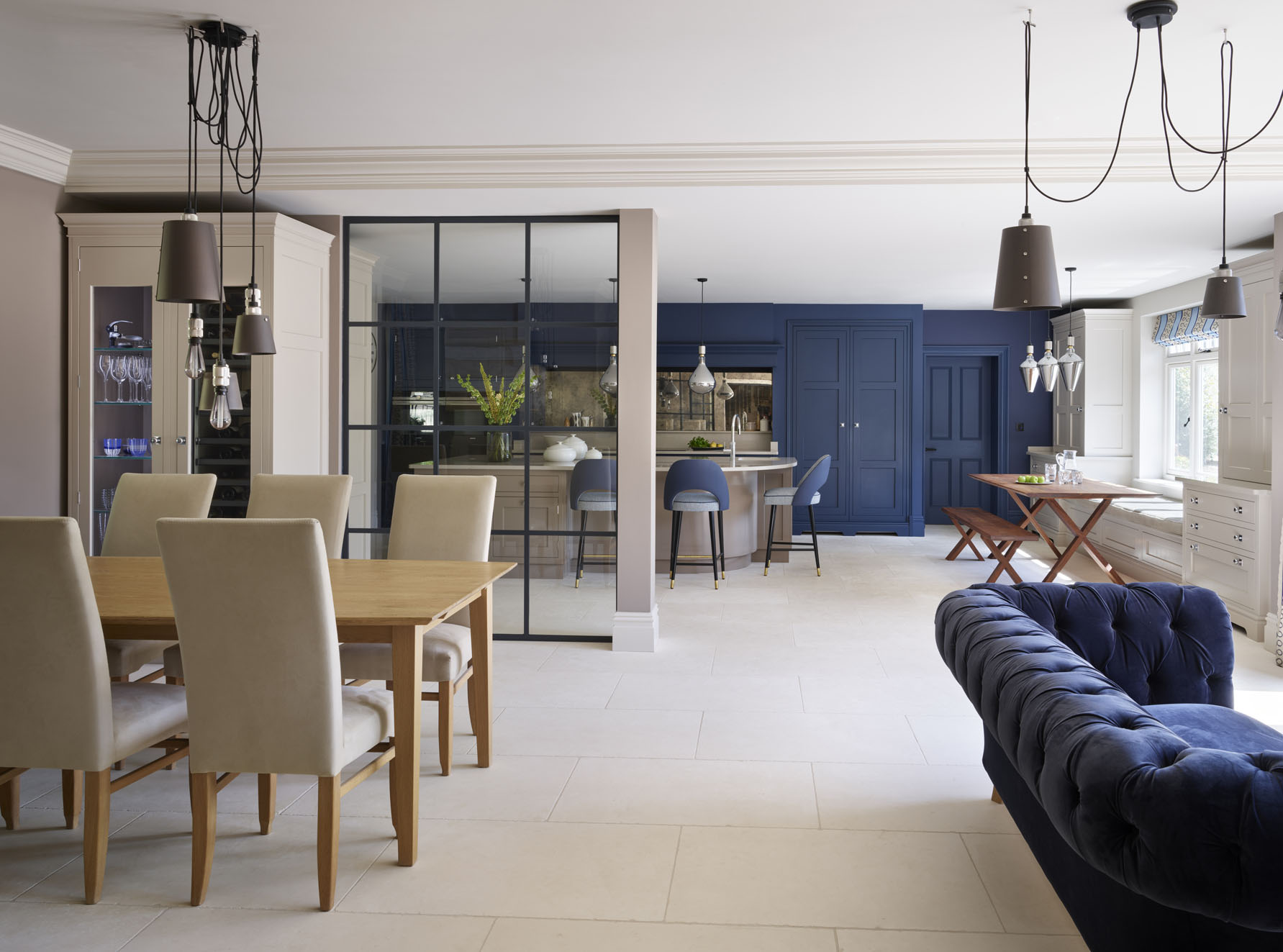
Stone is well suited to hardworking parts of the home. With the correct specification, installation and sealing it can serve beautifully for decades. Small signs of age tend to become part of its appeal rather than detract from it. This is particularly true of limestone, which wears in rather than feeling worn out.
Variation is not a flaw to be engineered away. It is the source of stone’s beauty. Mineral deposits, fine veining and occasional fossils create a floor with depth that a uniform surface cannot reproduce. Viewing a representative range of samples is therefore an important part of the selection process, as is agreeing the balance of colour and movement before installation.
Natural stone conducts heat effectively, making it a natural partner for many underfloor heating systems when the build-up, adhesive and installation method are designed together. Once warm, its thermal mass helps release heat gradually. In summer, the same surface can feel pleasantly cool. Always confirm compatibility and operating guidance with the flooring and heating specialists for the particular stone and system.
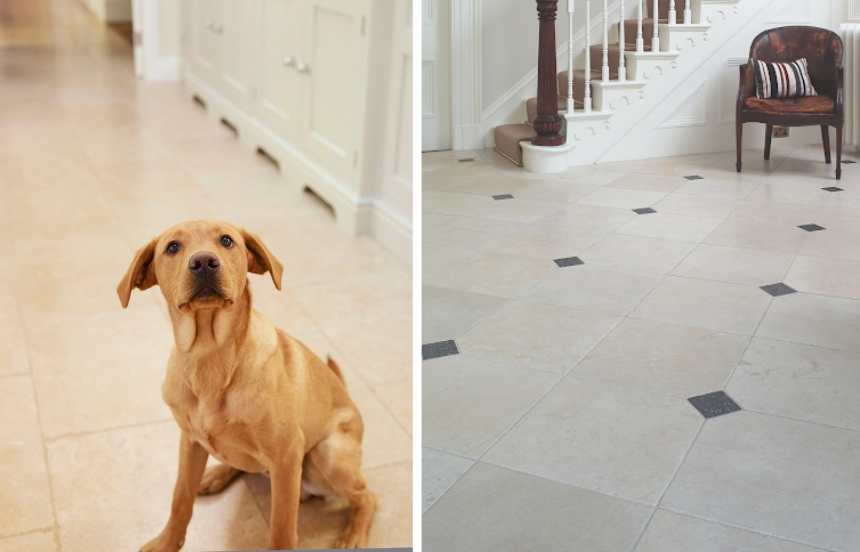
A sealed stone floor has a solid surface that is simple to sweep or vacuum and does not hold dust or pet hair in the way a textile covering can. As with any natural material, the finish and grouting affect day-to-day care. A thoughtful entrance mat and prompt attention to spills will do much to protect its appearance.
Flooring occupies a large visual area and influences every other material in the room. A well-chosen stone floor can bring cabinetry, countertops and architectural details into one harmonious composition. Its longevity also makes it a considered investment, both in the pleasure of the home now and in its lasting appeal.
Limestone has a softness of tone that is particularly easy to live with. Cream, honey, beige and blue-grey shades reflect changing daylight without demanding attention. Scattered shells and ancient fossil markings add interest at close range while the overall impression remains calm.
That balance makes natural limestone kitchen flooring a versatile companion to bespoke cabinetry. Pale stone can lift deeper painted colours while warmer varieties sit comfortably with timber, aged brass and richly veined countertops. Wood flooring creates its own warmth and elegance and may be the right choice for many interiors. Stone offers a different quality: a grounded, tactile surface that is especially at ease in kitchens, utilities, entrances and boot rooms.
The size and finish should be chosen with the room, not in isolation. Tumbled flagstones introduce a relaxed, established feel while a honed surface creates cleaner lines. In a large open-plan scheme, fewer grout lines and a restrained tonal range can make the space feel more generous. Smaller or more characterful rooms may welcome greater variation.
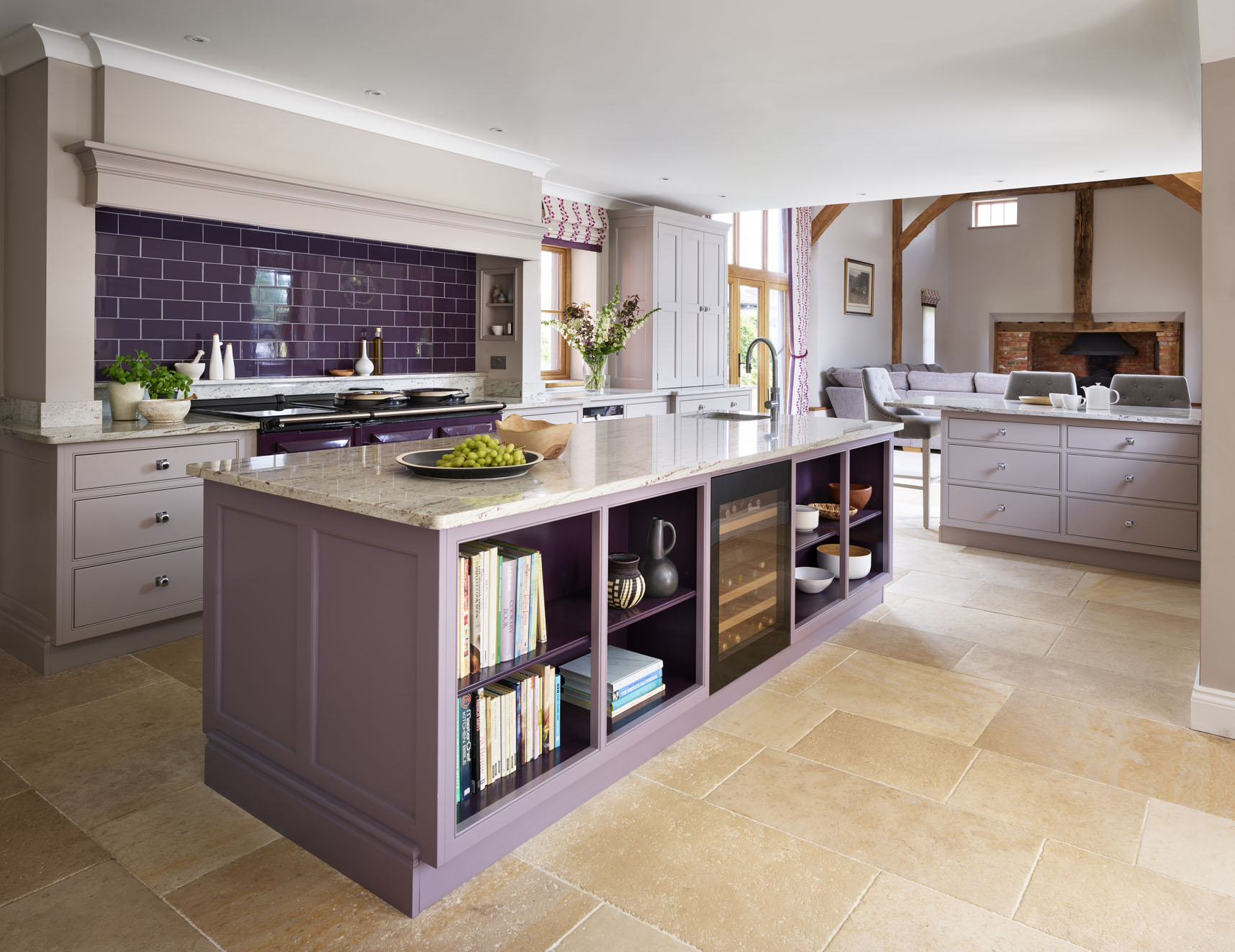
We see this across our own projects. In a Georgian country kitchen, softly varied Martin Moore Stone forms a quiet foundation for New Classic cabinetry and an Aga, allowing the architecture and crafted furniture to take the lead.
In a Surrey Modernist kitchen, the same natural material brings warmth and texture to cleaner lines. The lesson is not that stone belongs to one period or style, but that its scale, tone and finish should respond to the whole composition.
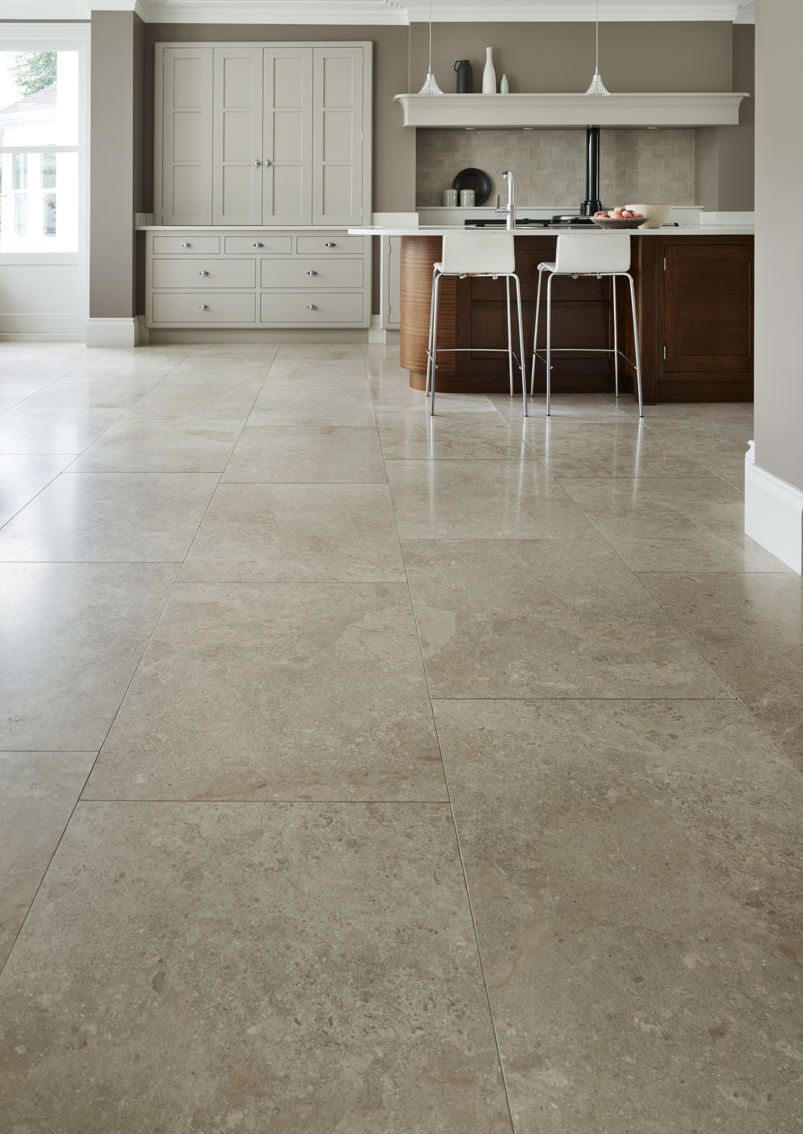
Our stone collection includes limestones sourced from Portugal, Egypt, Tunisia and Jordan. Aged St Luke is a pale Portuguese limestone with scattered fossils while Aged Melbury brings a light beige-to-grey palette and softly aged edges. Aged Jarash has cooler blue-grey tones. Each creates a different design styles and therefore we recommend seeing samples alongside the proposed cabinetry colours, countertops and metal finishes and viewing them in the room’s natural light.
Good care is straightforward but it should be tailored to the stone and its finish. Your supplier or installer should provide specific guidance. As a general routine:
Natural stone is not intended to look untouched forever. Gentle tonal change and a developing patina are part of its story. The aim of maintenance is to protect the floor and keep it beautiful, not to remove every sign that the room is lived in.
Our approach to flooring follows the same principles as our made to measure kitchens: thoughtful design, a deep understanding of materials and attention to how the home will be used. We carefully source natural stone and quality porcelain for traditional and contemporary settings and can undertake flooring as part of a Martin Moore home project or as a standalone commission.
The conversation begins with the room itself. We consider architecture, light, adjoining spaces and the palette of the cabinetry before helping to refine the stone, format, finish and layout. The result should feel settled from the day it is installed and grow more beautiful with time.
Explore the Martin Moore Stone collection or contact us to discuss flooring for your home and arrange samples.
Share