There is a particular ease to life by the coast, where light shifts constantly, views seem to stretch further, and interiors take on a quieter, more open quality. When designing a coastal kitchen, it is never just about the room itself. It is about responding to the setting and allowing that environment to shape how the space is experienced.
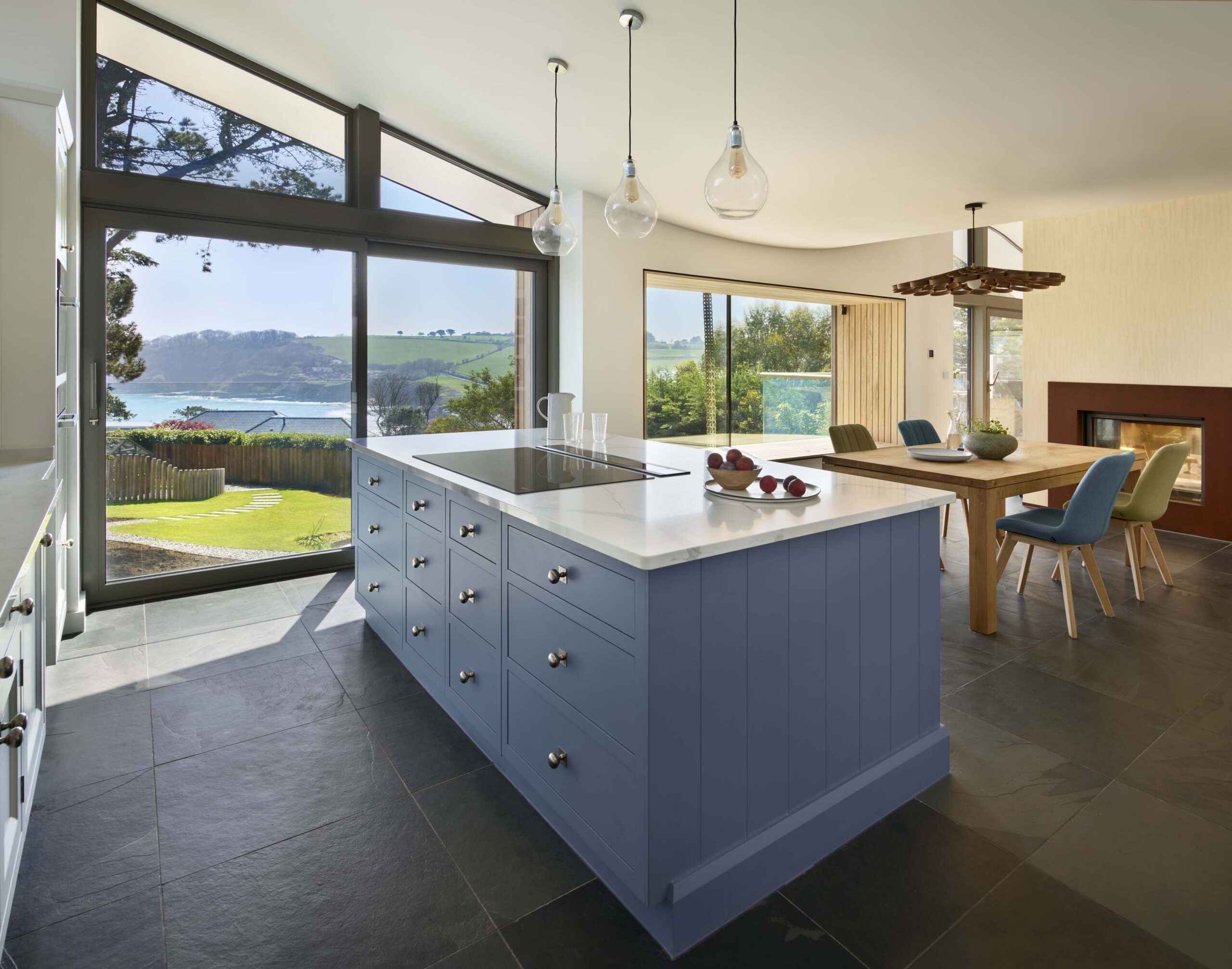
A well-considered coastal kitchen makes the most of its surroundings without overworking them. Sightlines are framed rather than forced, and natural light is allowed to move freely through the space. Here, the transition between inside and out feels instinctive rather than designed.
Whether overlooking dunes, water or a simple garden that leads towards the sea, the kitchen often becomes the natural focal point. It isn’t a place just for cooking, but for gathering, pausing, and taking in the view.
Open plan layouts tend to work particularly well here. They allow a light, airy space and create a sense of continuity between the kitchen, dining and living areas. Cabinetry, materials and architectural details are then brought together more quietly, so nothing interrupts that connection to the landscape.
Our Cornish seaside kitchen project is a good example of this approach, where colour and layout were shaped entirely by the surrounding light and views.
When thinking about how to design a kitchen in a coastal home, the layout should almost always begin with orientation. Consider where the light comes from, where the view sits, and how people naturally move through the space.
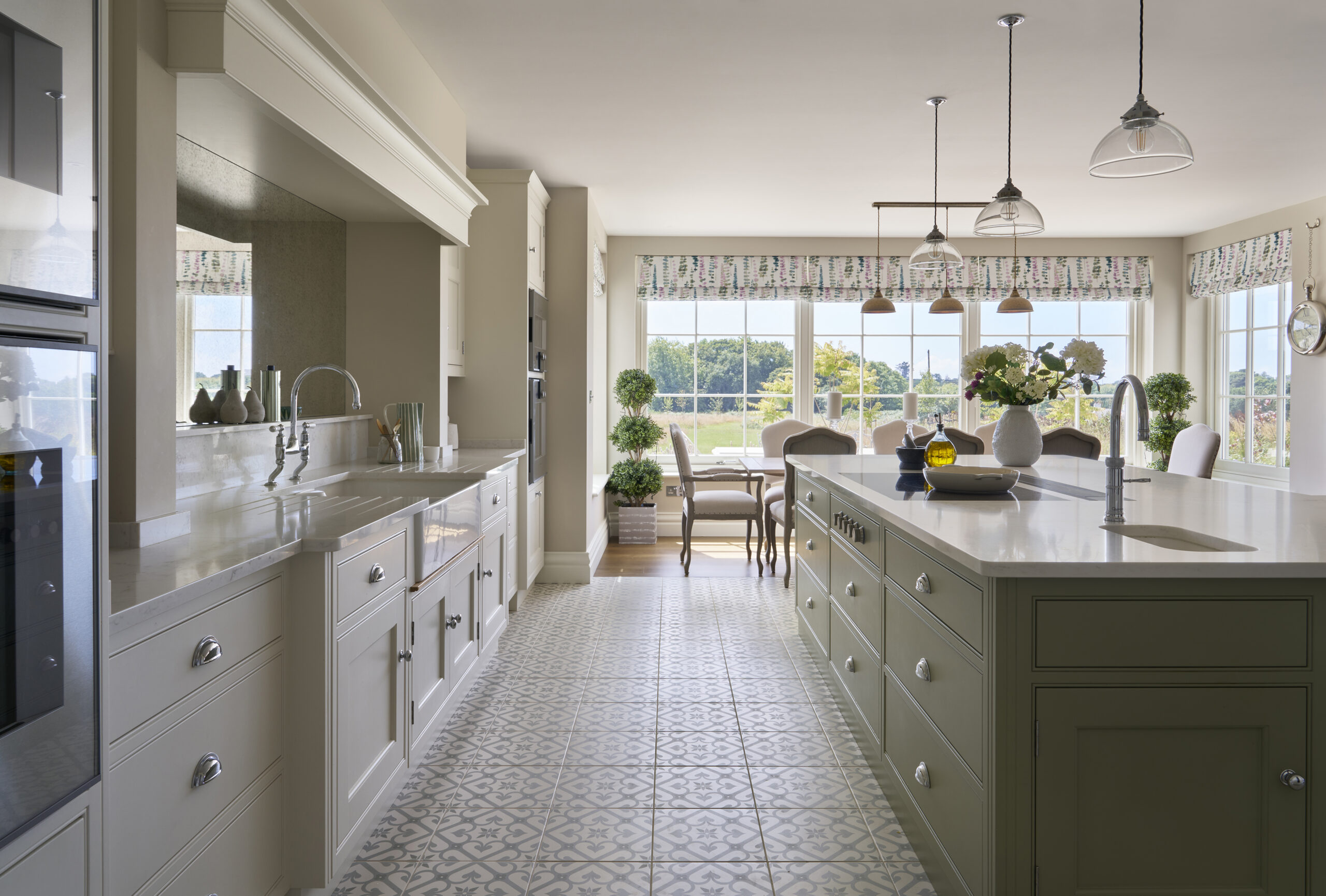
In many beach house kitchens, we position islands or dining areas so they face outward. It is a simple decision, but one that changes how the room is used day to day. Cooking becomes less inward-facing and it then feels more connected to what is happening beyond the windows.
Open plan arrangements support this sense of flow. By reducing visual barriers, the kitchen becomes part of a wider living space rather than a defined zone. Integrated seating, whether at an island or set into a window recess, encourages people to linger. See one of our coastal open plan kitchen designs here.
Even in smaller coastal kitchens, the same principles apply. Clean lines, sleek cabinetry and carefully placed glazing can create a feeling of openness without needing additional space.
There are no fixed rules for coastal kitchen layouts, but the most successful designs tend to do one thing well: they quietly orient the home towards its surroundings.
Colour in a coastal kitchen rarely needs to be complicated. In most cases, the landscape provides everything required.
We tend to draw from what is already there. These might be soft, sandy neutrals or weathered timber tones, muted blues and greens that shift depending on the light. Colours like this sit comfortably within the space and allow it to feel settled rather than styled.
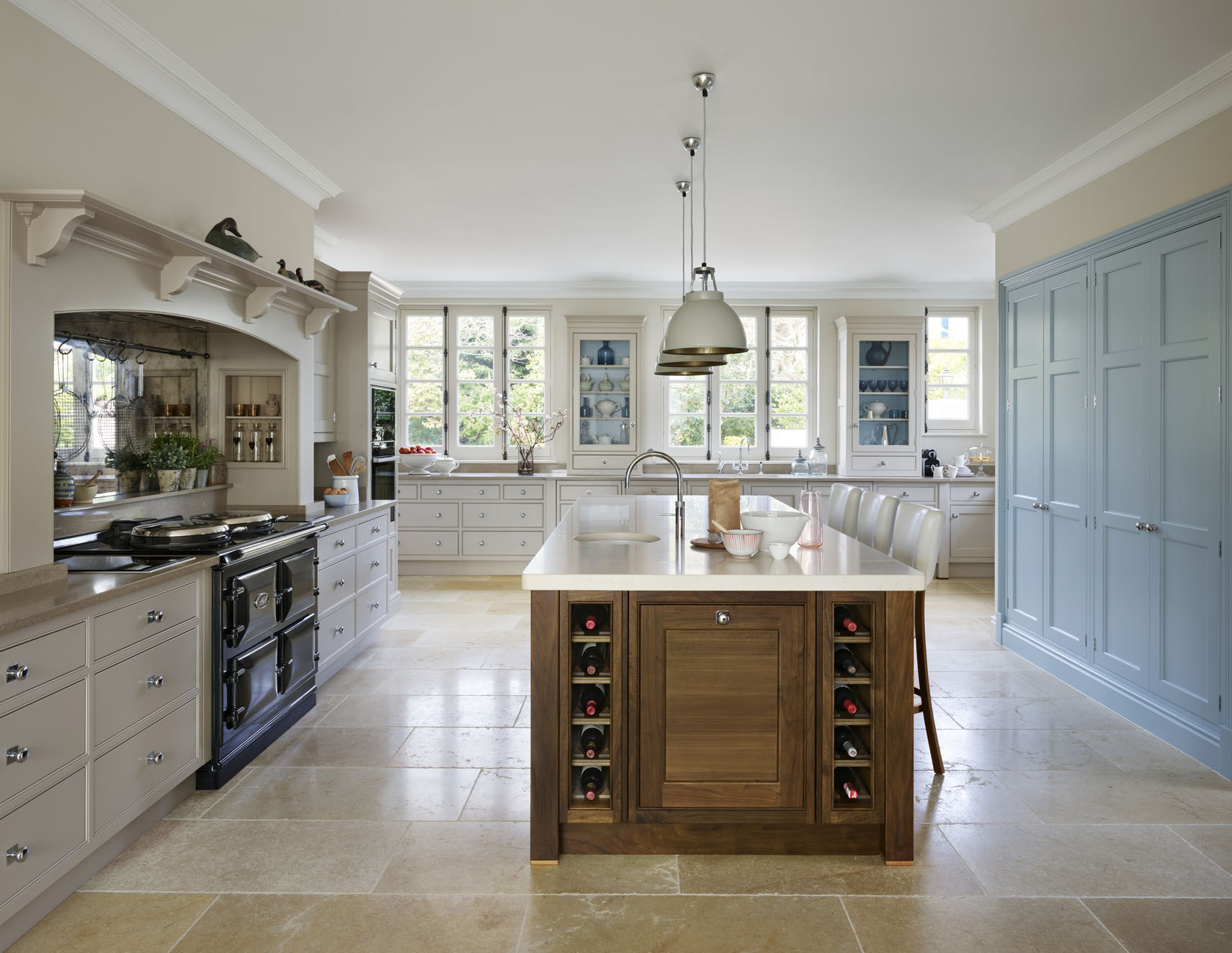
White remains an important foundation, particularly in rooms with strong natural light. Used well, it reflects rather than flattens, especially when paired with hand painted cabinetry or dark walnut finishes.
Where clients want a little more definition, we might introduce colour more selectively. A muted blue on an island, for example, or a softer green within a dresser, adds personal touches to the space without pulling focus.
In a more rustic beach house kitchen, texture becomes just as important as colour. Limewashed finishes, visible grain and gently aged surfaces bring warmth and prevent the space from feeling overly crisp.
The most effective seaside kitchens are rarely overtly themed. Instead, they feel like a natural continuation of their setting, with colour used to support that atmosphere rather than dominate it.
Materials play a defining role in how a coastal kitchen feels over time.
We generally favour natural finishes that respond well to light and wear in a way that adds character. Timber is often central, particularly in lighter tones, used across cabinetry or flooring to maintain a sense of brightness.
For countertops, stone works particularly well. Honed quartzite or beautifully veined granite introduces a level of refinement, while still feeling appropriate for everyday use. These surfaces also reflect light subtly, which helps soften the overall palette.
In more contemporary coastal kitchens, we might introduce glazed tiles or lightly reflective surfaces such as mirrors to echo the movement of water. The effect is often understated, but it brings a quiet sense of texture and variation.
Where a warmer, more Mediterranean influence is desired, materials such as limestone flagstones or aged brass can add depth. The key is restraint. Coastal kitchen decor tends to draw from the environment itself, while nautical styling can feel more literal. We always lean towards the former.
Lighting should never be an afterthought. A combination of pendants, wall lights and discreet task lighting ensures the kitchen remains balanced throughout the day, from bright mornings to softer evenings.
Our Jersey kitchen project explored many of these material choices, shaped by its coastal setting and the quality of light within the space.
Designing a kitchen near the coast requires a careful balance. The setting often does much of the work, so the design needs to support it rather than compete with it.
Over the years, we have worked on coastal kitchens in a variety of locations, each with its own character. No two are the same, but the approach remains consistent. We consider how the space will be used, how it will feel at different times of day, and how it will evolve over time.
By combining thoughtful layouts with carefully chosen materials and a considered use of light, we create kitchens that feel entirely at ease in their surroundings.
If you are planning a coastal or seaside kitchen, we would be delighted to help shape a design that reflects both the setting and the way you live.
Share