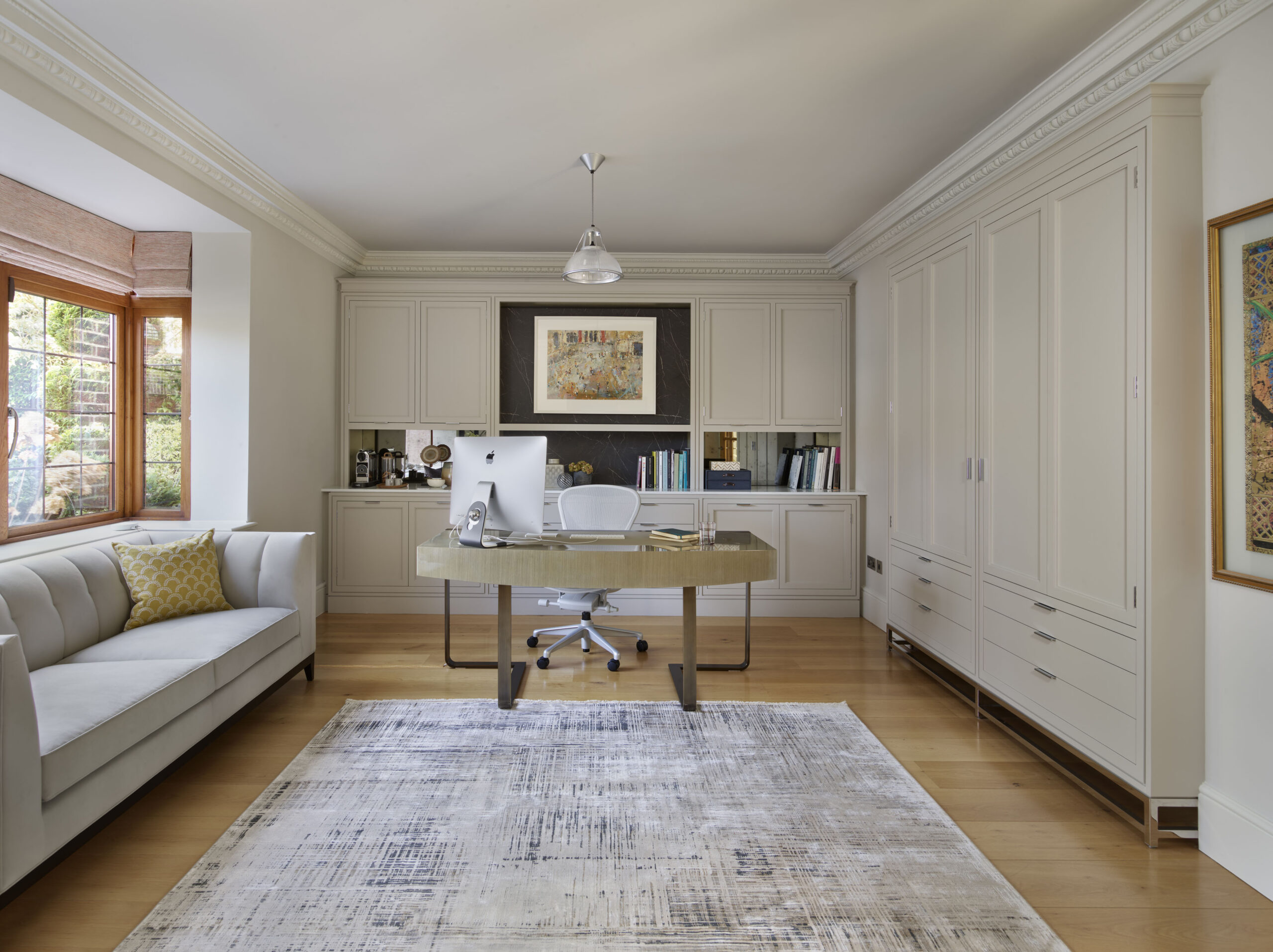
At Martin Moore, our bespoke cabinetry extends far beyond the kitchen, allowing us to bring the same craftsmanship and attention to detail to every part of the home. A home office is a natural example: a workspace designed not only around the room itself, but around the individual way in which it will be used.
Temporary arrangements at the kitchen countertop or in a spare room can serve a purpose for a time, but rarely provide a comfortable long-term solution. The most successful home offices bring together practicality, comfort and a sense of calm, creating an environment that supports concentration while remaining in harmony with the wider interior.
From the position of the desk and the quality of the light to beautifully integrated storage, each element has a role to play. Whether you have a dedicated study or are exploring small home office design ideas for an overlooked corner, thoughtful planning can transform the way you work at home.
When planning a home office with our clients, we begin by understanding how they work. Will the room be used every day or only occasionally? Does it need to accommodate two people? What technology, paperwork and specialist equipment must be close at hand?
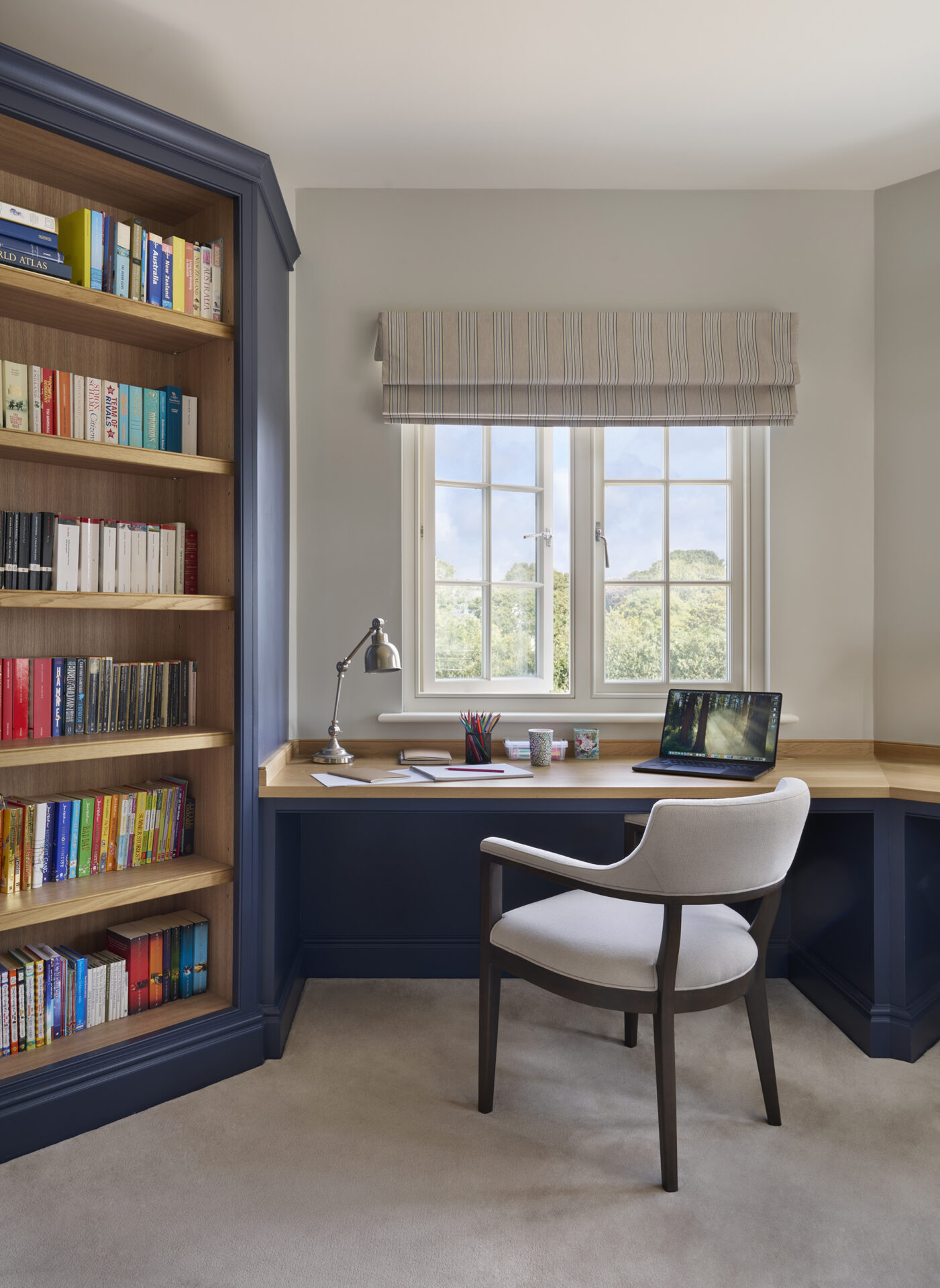
These practical considerations help to shape the home office layout. A generous desk may be needed for multiple screens, while a shared office might benefit from dual desks with clearly defined areas for each person. A comfortable, supportive chair is equally important, particularly when the room is used for long periods.
Where space allows, it can be useful to create different zones within the room. Alongside the principal workspace, this might include an area for filing and administration or an armchair for reading and taking a break between tasks. In a smaller setting, a single piece of fitted furniture may fulfil several of these functions without overwhelming the room.
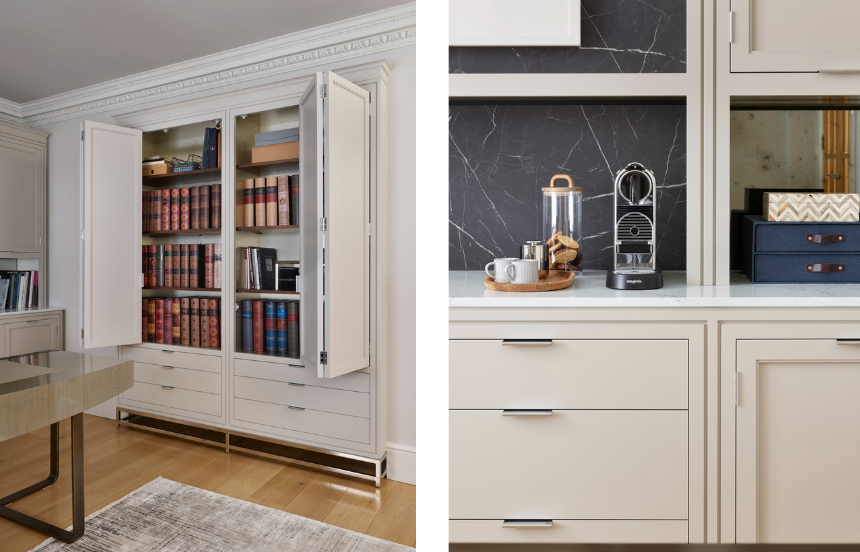
Light should also be considered from the outset. The desk and cabinetry can be positioned to benefit from natural light while minimising glare on screens. Integrated task lighting then provides more focused illumination when needed, helping the room remain comfortable and inviting throughout the day.
The relationship between work and home life is another important consideration. A dedicated study naturally provides separation, but this can also be achieved within a bedroom, living room or hallway. Screens, concealed desks and cabinetry that closes at the end of the day allow the space to return to its domestic setting once work is finished.
Well-planned storage is fundamental to a calm and efficient workspace. Even in an increasingly digital world, most home offices need to accommodate a combination of paperwork, books, stationery and technology. Considering these requirements early ensures that storage becomes an integral part of the design rather than an addition made later.
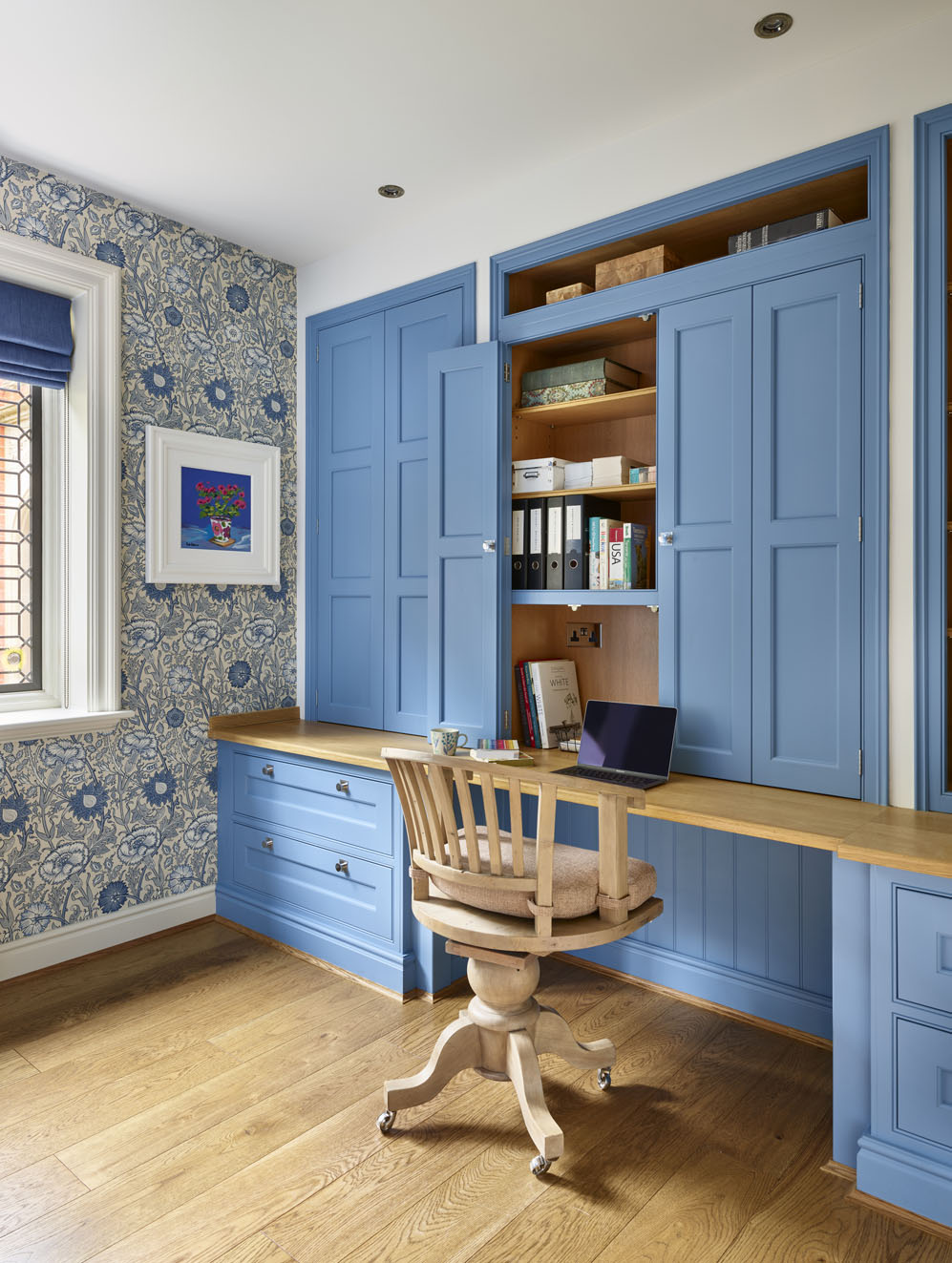
A combination of drawers, cabinets and open shelving can provide both practical storage and visual balance. Desk drawers keep smaller everyday items close at hand, while deeper cabinetry can accommodate files, printers and larger equipment. Open shelves introduce a more personal element, providing space for books, artwork and collected objects.
Power points, charging facilities and cable management also deserve careful attention. Wires can be routed discreetly through bespoke furniture, while printers and other technology can be housed behind cabinetry doors when not in use. The result is a composed environment in which the functional elements of the working day do not dominate the room.
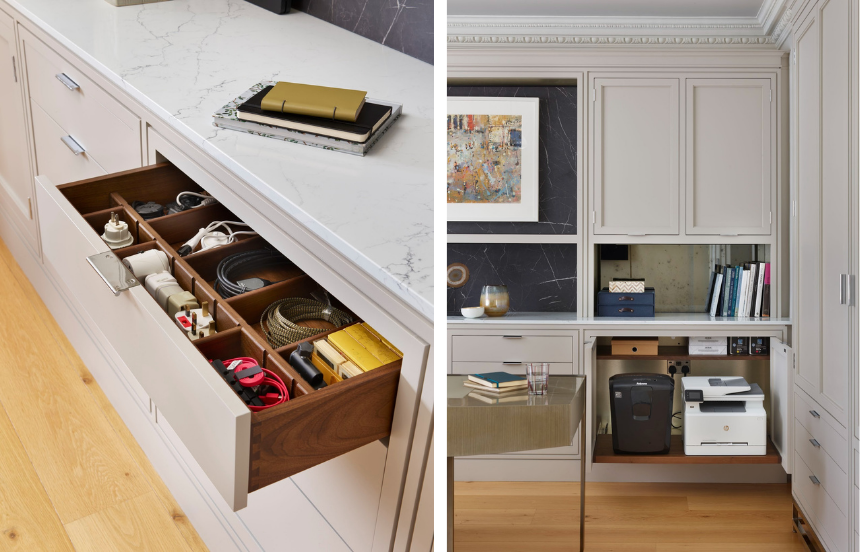
In a small home office, storage needs to work particularly hard. Floor-to-ceiling cabinetry makes use of the room’s full height, while fitted drawers and shelves can be tailored precisely to alcoves, sloping ceilings and other architectural features.
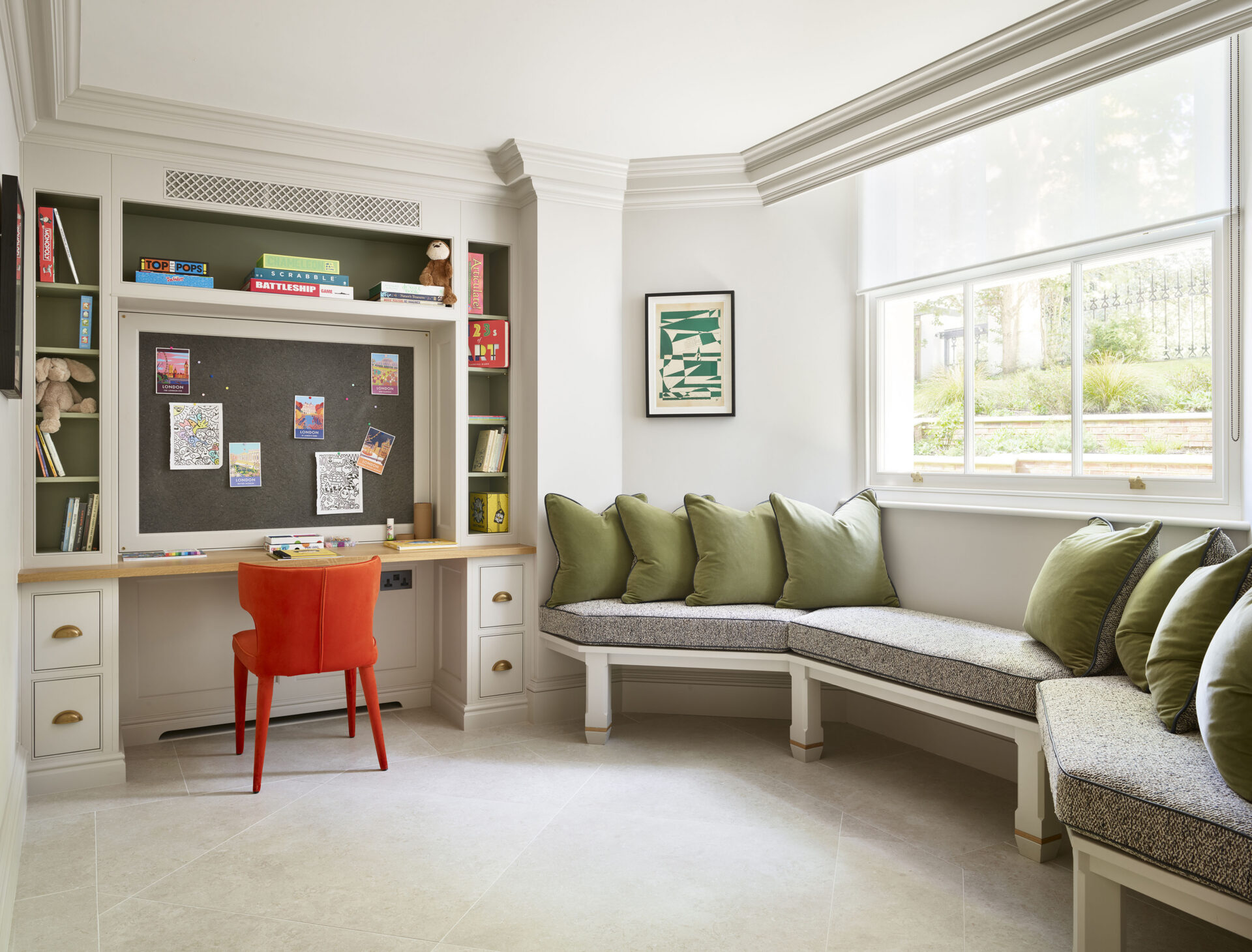
Bespoke fitted furniture allows every part of a home office to be considered in relation to the room. Rather than relying on freestanding pieces in standard dimensions, cabinetry can be designed around the architecture, creating a more generous and balanced sense of space.
A built-in desk can be tailored to the required height and depth, with storage positioned according to the items used most frequently. Shelving can bring structure and character to the room, balancing books and personal objects with concealed cabinetry for less decorative essentials. Bespoke filing drawers can also be incorporated discreetly, providing generous capacity without interrupting the visual flow of the interior.
The finer details are just as important. Carefully mitred joints, bespoke detailing and precision made cabinetry all contribute to the quiet sense of quality that distinguishes a considered interior. Finishes can then be selected to complement the wider decorative scheme, ensuring the office feels connected to the rest of the home.
Because each piece is made for its setting, bespoke furniture can also allow for the room’s future use. Storage requirements may change, technology will evolve and a shared workspace may eventually serve a different purpose. A well-designed scheme provides the flexibility and longevity needed to adapt over time.
A dedicated study may be the ideal, but thoughtful design can create an effective workspace in almost any part of the home.
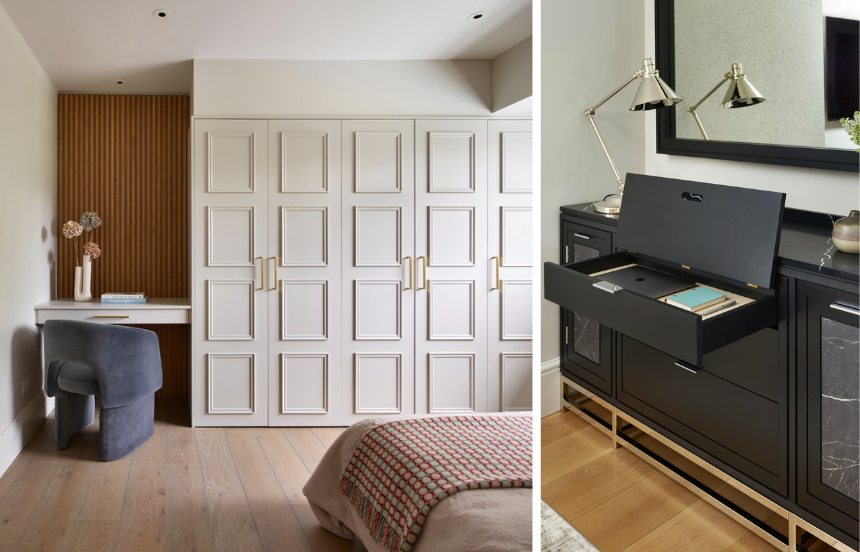
Within a bedroom, the office should feel discreet and composed. A desk can be integrated into fitted furniture or concealed behind cabinetry doors, allowing work to be put away at the end of the day. Coordinating the colour and detailing with the surrounding furniture helps the workspace blend naturally into the room.
A living room office requires a similar sensitivity. Foldaway desks, comfortable seating and concealed storage allow screens, files and cables to disappear from view, returning the room to a more relaxed setting once the working day is over.
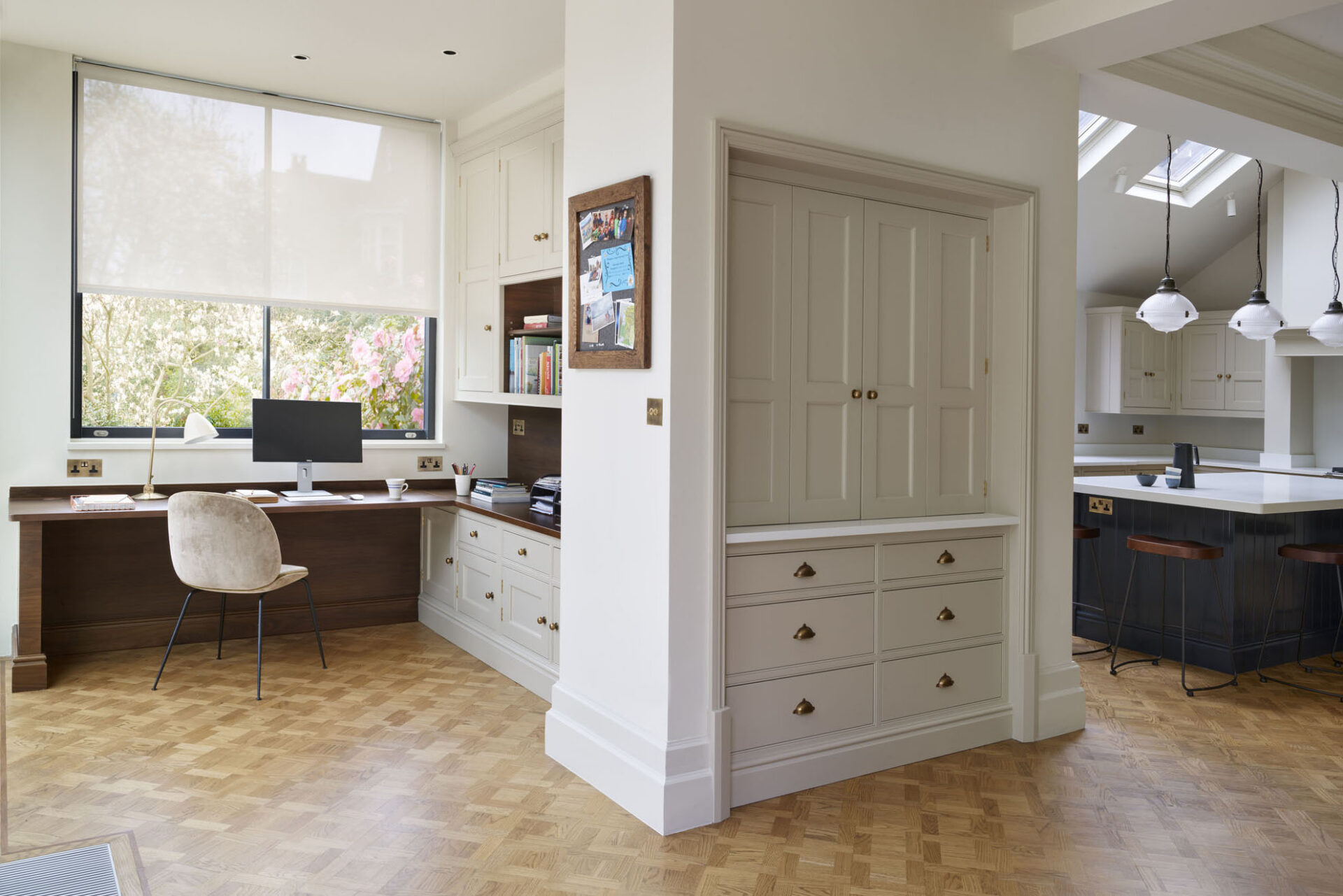
Previously overlooked spaces can also present interesting opportunities. An alcove, landing or area beneath a staircase may provide enough room for a compact home office setup. Here, fitted furniture is particularly effective, making use of the available height and depth while keeping visual clutter to a minimum.
Colour has an important part to play, especially when the workspace forms part of another room. A finish that complements the surrounding palette will create continuity, while a contrasting colour can give the office its own distinct identity. The choice will depend on whether the intention is to conceal the workspace or celebrate it as an architectural feature.
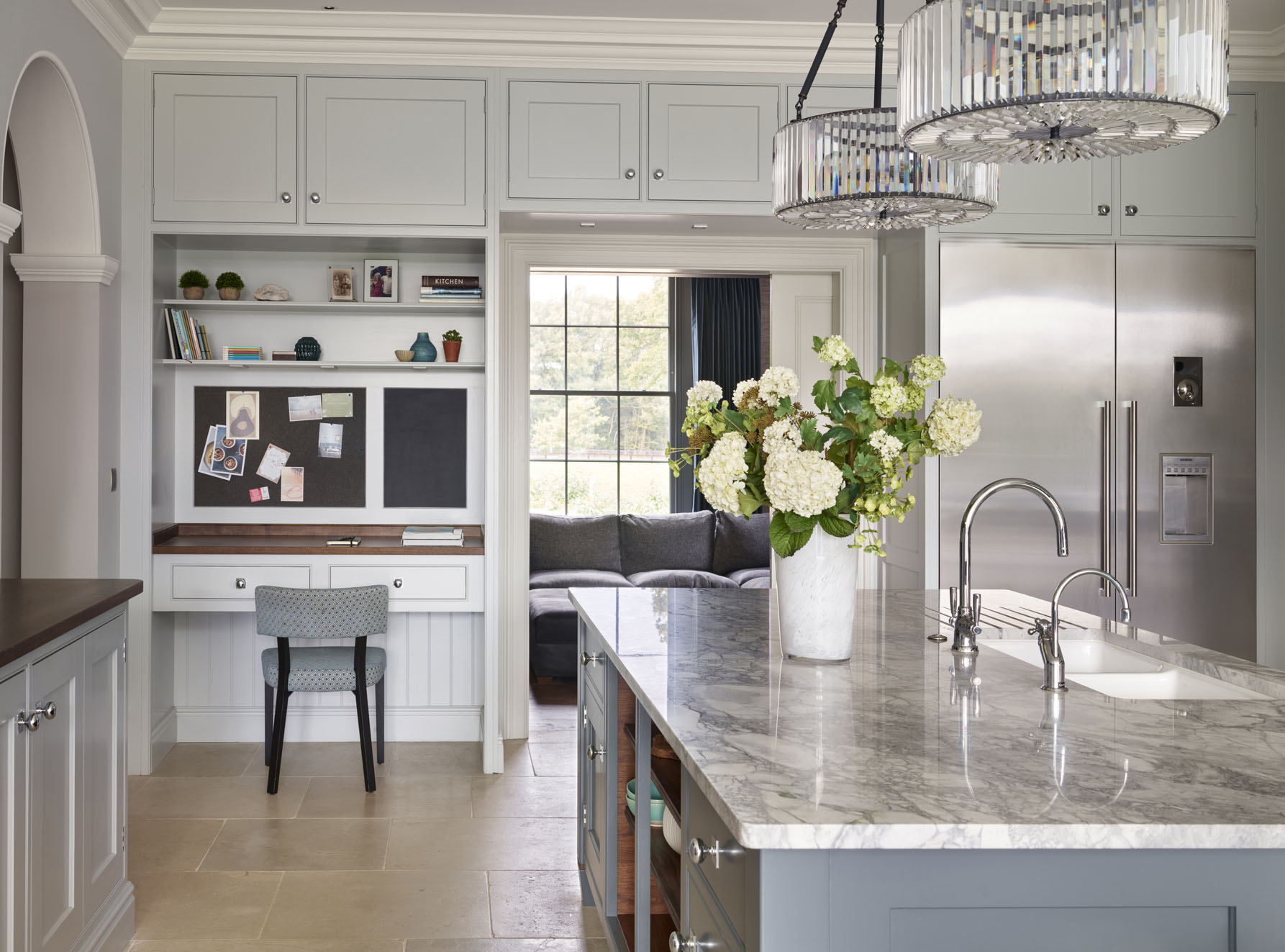
With its refined detailing and exceptional flexibility, our Deco Umbra collection lends itself beautifully to home office design. Cabinetry can be colour matched to complement the surrounding interior, while each element is tailored to the room and the individual way in which it will be used.
The result is a workspace that feels purposeful without being purely functional: calm, comfortable and entirely at home within its setting.
Contact us to discuss a bespoke home office designed around the way you work.
Share